CHAPTERS
I. Descriptive …………………………………………………………1
II. The Indians …………………………………………………………8
III. Early Settlement …………………………………………16
IV. Growth and Foreign Immigration ……32
V. Means of Communication …………………………42
VI. Marine ……………………………………………………………………55
VII. Railroads ……………………………………………………………85
VIII. Military ……………………………………………………………112
IX. Politics ……………………………………………………………133
X. Village and City Government …………167
XI. Churches ……………………………………………………………183
XII. Societies and Organizations …………227
XIII. Education …………………………………………………………243
XIV. The Press …………………………………………………………255
XV. The Professions …………………………………………278
XVI. Banks and Banking …………………………………281
XVII Business and Industry …………………………288
Errata and additions………………………………316
Appendixes ……………………293(A), 294(B), 300(C), 313(D)
Index
P 112 - CHAPTER VIII. - MILITARY.
The American always rejoices in the annals of his military achievements. That
the valor of the nation has stood the test of many a conflict is sufficient cause
for such a feeling. Such a pride loses nothing of its essence but is in fact
enhanced when history is narrowed down and brought home to any community. Thus
the part played by Manitowoc county in military affairs of over a half a century
is of interest, the more so since all of the actors were known as neighbors and
many of them linger still in the form of sad memories in the minds of the older
generation.
When Wisconsin was organized as a territory the old southern militia system,
wherein every able bodied citizen within certain age limits was enrolled, was
adopted. Of course in such a newly settled region it was impossible to mobilize
the force or to hold any drills but the system existed on paper nevertheless. As
early as the later thirties Manitowoc county was assigned as a part of the Second
regiment, remaining so for some years. Reorganization took place in 1839 and in
1842 the county regiment system was adopted, whereby each county was made a unit
of military organization, Manitowoc being a part of the First Bat., Second Reg.,
First division. According to the records on February 17, 1842 company E was
constituted as follows: --Captain, Pliny Pierce; first lieutenant, Alfred Wood;
second lieutenant, P. P. Smith. In 1847 T. A. H. Edwards was made colonel of the
Manitowoc county militia, C. H. Champlin, Lieutenant-colonel and A. D. Soper major.
Then came the Mexican war, causing a general reorganization in military circles.
P 113
Manitowoc county was too far in the wilderness to take a part in this struggle,
although a few of the later settlers, notably S. W. Smith, had served in it. The
Wisconsin militia regiments were brigaded at about this time and in 1848 Daniel
Bolles was made colonel of the county regiment. Such appointments continued
during the fifties, among those holding military commissions being J. M. Sherwood,
W. Lozier, S. W. Smith and Temple Clark, the latter becoming particularly prominent
as major-general of a district composing Manitowoc, Calumet, Brown and Kewaunee
counties, known as the Eight division. Reverend M. Hoyt was division chaplain in
the later fifties, Colonel A. Wittman, quartermaster, Dr. White of Two Rivers
surgeon and H. C. Hamilton of the same place aide to General Clark. In the first
brigade were Manitowoc and Calumet counties under command of Brigadier-General
S. W. Smith, F. Borcherdt acting as aide and Dr. A. W. Preston as surgeon.
Manitowoc county composed the Thirteenth regiment under Colonel F. Salomon,
Lieutenant-Colonel W. Aldrich and Major C. Bates. Under this system, which
obtained until 1861, there were about 2,600 enrolled militia in the county.
An end was put to this more or less amateur soldiering by the approach of the
dark clouds that portended serious civil struggle. The crash came suddenly and
in the county as in fact throughout the whole north it was almost sunning in its
effect. Busied with plans of material development the settlers along the lake
shore had not realized the imminence of war until Sumter was fired upon. But then
like thousands of other communities enthusiasm and interest was at a high pitch.
Six days after the first gun had been fired the first war meeting was called at
Manitowoc in the courthouse. It was convened by President Collins of the village;
J. F. Guyles was chosen chairman and E. D. Beardsley and S. W. Smith secretaries.
Speeches were made by Temple Clark, Henry Baetz, B. Anderson and Dr. Preston and
then the committee on resolutions, consisting of C. C. Barnes, J. D. Markham and
Jere Crowley, brought in a report. Some disagreement arose, Mr. Crowley not
signing the report favored
P 114
by the other two members, he being at the time a sympathizer with the south.
Inflammatory speeches followed by C. C. Barnes and W. M. Nichols but Mr. Crowley,
when called upon, refused to express his opinions, introducing instead a Mr. Wright
of New York, who happened to be in the village. The latter was a strong
Secessionist and made bold to say that he would fly the Palmetto flag from his
sailboat, which was in the harbor, but the crowd would have none of him and he was
hissed to his seat. Resolutions were then offered by P. P. Smith favoring Lincoln
and recommending the raising of a company. These were passed after a wordy battle
and volunteers were called for. The meeting was one of the largest ever held in
the village. Similar gatherings were held in Two Rivers and interest was high
there also, it being stated on April 24th that "the volunteers from Two Rivers will
more than fill a company." Two days before forty men had enlisted at Manitowoc and
this number was increased by fourteen the next day. Judge Thayer of the circuit
court was at the time holding a term at Manitowoc and in his charge to the grand
jury referred feelingly to the stirring times. On the evening of the 22nd another
rousing meeting was held, a procession being formed to escort Judge Thayer to the
courthouse, where he addressed the citizens. J. F. Guyles acted as chairman and
S. W. Smith and Otto Troemmel as secretaries while among the speakers were Reverend
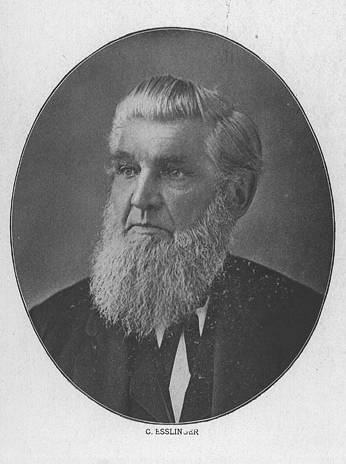
Engle, J. A. Bentley, J. D. Markham, C. C. Barnes, Temple Clark, C. C. Esslinger
and A. Wittmann. The company then mobilizing was soon denominated the Manitowoc
County Guards and on April 26th it elected officers as follows: - Captain, Temple
Clark; first lieutenant, Horace Walker; second lieutenant, Peter Scherflus, after
which Banker M. V. Adams made a patriotic speech. Three Mishicot young men,
Lafayette Smith, James W. Langworthy and Horace Price, together with D. A. Shove
and G. E. Waldo of Manitowoc, did not await the calling out of the Manitowoc Guards
and accordingly went to Milwaukee and joined the First Regiment, being the first
from the county to enlist and see active service.
P 115
All through the county by this time the people were aroused. At Branch Mills a
flag raising afforded the occasion of expressing enthusiasm and a similar
occurrence took place at the Second ward school in the village of Manitowoc. In
the meanwhile interest centered in Captain Clark's company, the support given to
it being unanimous. A private subscription was raised amounting to $1800 to form
a soldiers' fund as a further inducement to enlistment. In the list were $100
gifts from C. C. Barnes, W. Goodenow, Plate & Vilas, J. Lueps and B. Jones & Co.
and $50 donations from T. C. Shove, W. Murphy, T. & J. Robinson, M. Fellows, J.
Bennett, Collins & Co., Louis Sherman, J. A. Koehler, T. Windiate, S. Hill, J.
Richards, McDonald & Bros., Beer & Kern, C. Esslinger, J. S. Guyles, A. Wittman,
J. D. Markham, T. G. Olmstead, H. Berner, J. Roeffs, E. Haywood, W. Hand, G. Glover,
H. Baetz, W. H. Nichols, R. Klingholz and O. Torrison. Said the Weekly Herald:
"If every man in the company wants the Herald for his parents, wife or sweetheart
while he is fighting he shall have it." On May 1st 1861 Captain Temple Clark
issued the following proclamation to citizens: "The company of volunteers from
this county has been accepted by the governor and the officers commissioned. The
company by the governor and the officers commissioned. The company will be clothed
and equipped at the expense of the state as soon as they are assigned to a regiment
and ordered to rendezvous; in the meantime they will be kept under constant drill
and such of them as do not belong in the village will be boarded at the expense of
the state. One of the most necessary articles for the equipment of the soldier is
the blanket. The enormous demand for these renders it impossible for the state to
procure them in sufficient quantities to furnish all the volunteers in the state
unless aided by private contributions of this article and we are obliged to make a
call upon all our patriotic citizens to contribute from their private stores as
many blankets as they can spare towards supplying this necessary want of our
company. Respectfully Yours, Temple Clark."
The result was the formation among the ladies of the village of societies for the
preparation of necessaries for the
P 116
soldiers. The Guards in the meantime were fearful lest the war might be brought
to a sudden termination and thus they be deprived of an opportunity to show their
valor. At last after several weeks of weary waiting Captain Clark received orders
on May 21st to fill his company to a full quota of 100 men and to be ready to
march upon a moment's notice. Six days later a third mass meeting was held and
stirring addresses made, patriotism being foremost in all minds. Still no word
came for the company to move. On June 12th Colonel Emery arrived and mustered the
company into the state service. During the same week a beautiful ceremony took
place in the presentation of a flag to the company made by the ladies of the
village, the presentation address being made by Mrs. Collins and the captain
replying in a few feeling words. The flag was captured at Cold Harbor but was
later retaken and after an exhibition at the Centennial was placed in the Capitol
at Madison.
Then came the command to mobilize at Madison and on Sunday evening, June 23rd,
1861, The Manitowoc County Guards embarked on the Goodrich liner Comet and were
carried southward. The largest crowd ever assembled in the village was present at
the pier and the scenes enacted were of a nature never to be forgotten as partings
were said, in many instances for the last time. Upon arrival at Camp Randall in
Madison drilling was the order of the day and on July 13 the men were mustered into
the United States service as Company A, Fifth Wisconsin infantry. Said the Madison
Journal of the company: "They are strong, hardy men from the lumbering districts,
who have been well drilled in machinery but have not been exercised in the manual
of arms." This paper also described graphically the surroundings of the company's
quarters. White pebbles had been utilized to make inscriptions giving the name of
the organization and in front of the captain's tent were the words: "Captain Clark,
God Bless Him," while three flags floated above this portion of the camp. The
record of the Fifth during the war was a noble one. After the battle of Bull Run
the regiment with others was hurried to the front and the first engagement in
P 117
which it participated was that at Lee's Mills, Va., on April 16, 1862. Captain
Clark was transferred in a short time, being promoted for bravery at Corinth and
occupying a position on the staff of General Rosecrans. Thus the command early
devolved upon Captain Walker, who through the troublous Virginia campaigns under
McClellan, McDowell, Burnsides and Meade, led his men until at Rappahannock on
November 7, 1863 he was struck down by a bullet. The company, however, continued
its career until July 1864 when it was mustered out, its three years of service
being at an end. Many of the members re-enlisted in other regiments while the
remainder returned home. During its service twenty-three men on the muster roll
were killed outright, ten were reported missing and twenty-seven were seriously
wounded. Thus it happened that out of the 106 men that left Manitowoc on that
June evening only 36 returned. Among these names later well known were those of
J. S. Anderson, W. Rickaby, F. Stirn, J. Mill, J. Gilbert, D. Buboltz, F. W.
Borcherdt, J. L. Cox, J. Enert, A. B. Gibson, J. R. Leykom, G. B. Engle and J. H.
Leonard.
The first company sent to the war had not left the village before it became
evident that the struggle was to be a long one and that the nation's resources
would be taxed to the utmost. In the early part of May the German residents of
the village organized the "Home Guards," Frederick Becker being chosen captain and
Colonel Baetz assisting in the recruiting. It was soon announced that the Guards
were to form a part of the Ninth Wisconsin. This was not, however, the only
organization for which recruiting was in progress during the fall of 1861. In
August F. Borcherdt was authorized to raise a company but did not succeed and
another attempt was made a month later by Jere Crowley to get together an Irish
company, the Meagher Guards, which was similarly unsuccessful. D. A. Shove and
G. E. Waldo in the meantime had returned from their three months service with the
First Wisconsin and plunged actively into the work of enlisting a company for the
Fourteenth and soon Colonel K. K. Jones commenced similar efforts among the
Norwegian
P 118
residents of the county, intending to make his command a part of the Fifteenth
Wisconsin which was being raised exclusively among those of that nationality.
Other agencies were active also. The county board assembled and appropriated
$1,500 for the relief of indigent soldiers' families while in Two Rivers the
Ladies Relief Association was formed, the officers being:--President, Mrs. Van
Valkenburgh; vice president, Mrs. Joseph Mann; treasurer, Mrs. J. Burns and
secretary, Mrs. Alanson Hill. Kindred organizations were formed at Manitowoc and
Cato.
Captain Becker's company left the city on October 2nd for Milwaukee and Manitowoc
was honored in the choice of one of its citizens, Frederick Salomon, as colonel of
the regiment, the Ninth, of which the company was a part, it becoming Co. B.
Colonel, afterward General Solomon rose higher perhaps than any other Manitowoc man
and the village always delighted to honor him. On the day before his departure he
was presented by the German citizens with a beautiful charger which he used
throughout the war. There were many men outside of Co. B from Manitowoc county in
the Ninth; several from the town of Schleswig were in Co. A while Co. K was made up
entirely from men from that and surrounding townships under the command of Captain
H. F. Belitz and in Co. I there were several soldiers from the towns of Newton and
Manitowoc. The regiment was mustered into service at Camp Sigel at Milwaukee
October 18th and left for the west the succeeding January, being a part of the Army
of the Frontier, serving in Kansas, Missouri and Nebraska until mustered out in
January 1866. During the first year the officers of Co. B were:--Captain,
Frederick Becker; first lieutenant, A. F. Dumke and second lieutenant, Gerbert
Guetzloe, of Newton. In May 1862 Captain Becker resigned and returned home to
engage in business, thus causing changes among his subordinates, Hugo Koch becoming
second lieutenant. Captain Belitz resigned his command at about the same time
while several months later C. H. Schmidt became a captain of Co. I of the same
regiment. The men in this organization although not in many battles saw much hard
ser-
P 119
vice, such as scouting, guarding trains, etc. After their gallant colonel had been
promoted to a generalship in September 1863 he visited his old home and was given
an ovation by his townsmen, a public meeting being called at which many
complimentary addresses were made. About twenty-five of the Ninth returned to
Manitowoc in December 1864 upon the expiration of their service but many
re-enlisted for the two succeeding years.
Later in 1861 two more companies left Manitowoc. The part played by the men from
the county in the fourteenth regiment was a large one. It was Company E of this
organization that was commanded by George E. Waldo and D. E. Shove, who were made
captain and first lieutenant respectively, while Daniel Ramsdell was commissioned
as second lieutenant. The regiment gathered at Camp Hamilton, Fond du Lac, under
Colonel Wood and was mustered in January 30, 1862, leaving for St. Louis three
months later. There were a few men from Manitowoc in Co. F also, James La Counte
acting as first lieutenant for the first two years of the service. The regiment
after reaching the south was soon plunged into the baptism of fire. At one of the
first battles in which it participated, that at Shiloh, the gallant Captain Waldo
was struck down, being brought home a corpse. He was a young man of great
popularity, a testimonial of which had been presented to him in the shape of a
sward before he left the village, and the feeling of loss occasioned by his death
was a personal one to every resident. Joseph Smith succeeded him as captain of
Co. E and remained such until the end of the war. In the same year B. F. Goodenow
became first lieutenant, while among the Manitowoc men to occupy offices in the
regiment were W. F. Eldridge, sergeant-major; John M. Read, sergeant-major and
adjutant-major, Rev. G. B. Engle of St. James, who in 1864 became chaplain and
R. S. E. Zeilley, who was the surgeon of the regiment. The regiment saw several
years of hard service, fighting at Vicksburg, Champion Hills and in many other
battles. Their service expired in January 1864 but a majority, after enjoying a
furlough, re-enlisted. The men in company E returned home in October,
P 120
1865 and their duties done, were soon engaged in their various occupations. The
Fourteenth formed a regimental association in 1880 and has held frequent reunions.
The other company to leave in 1861 was Co. F of the fifteenth Wisconsin, known as
the Norwegian regiment. The men took their departure for the rendezvous at
Madison on the 10th of December, and K. K. Jones was given a commission as
lieutenant colonel of the regiment, Hans Heg being the colonel. An interesting
fact in this regard was that colonel Jones during the war carried the sward that
his father, William Jones, one of the promoters of the Manitowoc Land company in
1835, carried in the war of 1812. Company F was wholly from Manitowoc county,
being commanded by Captain Charles Gustaveson of the town of Rapids, a former
soldier in the Norwegian army, while the second lieutenant was also a Manitowoc
county man, Svend Samuelson of Eaton. The regiment was mustered in at Camp Randall
on Feb. 14, 1862 and a month later was transferred to St. Louis. It served
faithfully for three years, being engaged at Stone River, in the various battles
before Atlanta and remaining in Tennessee until December 1864, when the men were
mustered out. A few soldiers from the county went into the Sixteenth regiment and
fully half a company in the Nineteenth was also made up of Manitowoc men, W. W.
Bates, the shipbuilder, being captain of Co. K, serving ably throughout the Atlanta
campaign.
The next full company to be sent forth was Co. K of the Twenty-First Wisconsin,
the recruiting for it commencing in the spring of 1862, with headquarters at C. H.
Walker's office. By this time it was seen that there were serious difficulties in
the way of subduing the foe and volunteers were not as numerous as in the earlier
days of the war. A draft was rumored as the summer dragged on and Manitowoc
county's quota was fixed at 839 under the call of President Lincoln issued in
August. The draft was then definitely ordered and on August 15th and 19th meetings
were held to secure volunteers in order that the quota might be met without
resorting to such severe measures. Speeches were made by Colonel
P 121
Sweet of the newly authorized Twenty-First, P. P. Smith, Judge Taylor and G. N.
Woodin. Enthusiasm was high and J. E. Platt offered $50 and forty acres of land
to the first recruit. Michael McGuire, a clerk, secured the prize but relinquished
it to a second, who in turn gave it to a third. Thus the company was filled with
sturdy young men, leaving seven days later on the steamer Comet. In the meantime
the draft had been postponed although Joseph Vilas had been chosen commissioner of
the county to supervise the drawing while Dr. A. Schenke was appointed examining
surgeon. Company K was officered as follows:-- Captain, C. H. Walker; first
lieutenant, Wyman Murphy; second lieutenant, Joseph La Counte and it was mustered
in at Oshkosh on Sept. 5, 1862. Five days later, under command of Colonel Sweet,
the regiment left for the south and within a month it had participated in its first
battle, that of Perryville. Here Colonel Sweet was wounded and Colonel Harrison
C. Hobart succeeded him. After Perryville the regiment went south and participated
in the Atlanta campaign, in the march to the sea and in further arduous service,
being mustered out on June 17, 1865. Among the officers which the county furnished
the regiment were Quartermasters H. C. Hamilton and B. J. Van Valkenburgh,
Quartermaster-Sergeant G. T. Burns and Lieut. F. W. Borcherdt of Company D. Mr.
Hamilton died of typhoid fever in April 1863 and his body was brought home to Two
Rivers and buried with military honors. He was thirty-six years old and had always
been prominent in the village of his abode, having served in the county board, the
assembly and as first president of the village. Captain Walker was promoted to the
position of major in 1864 and was succeeded as captain by Lieut. La Counte. The
Twenty-First regiment, organized as an association in 1868, being one of the first
to do so but no regular reunions were held until beginning with 1887. Among the
officers of the association hailing from Manitowoc have been J. F. Reardon and F.
C. Ostenfeldt and in June 1896 the reunion was held in the city, a program of much
interest being carried out.
During the summer of 1862 Messrs. Pizzala and Baetz
P 122
were also busy recruiting at Manitowoc for the Twenty-Sixth, otherwise known as the
Sigel Regiment, headquarters being stationed a Klingholz Hall. Company F was
raised in the county and was officered as follows:--Captain, Henry Baetz; first
lieutenant, Charles Pizzala; second lieutenant, A. Waller, of Milwaukee. Captain
Baetz was later promoted to the position of major and after a period of faithful
service the second commander, Capt. Pizzala was killed in May 1863. The regiment
was mustered in at Milwaukee in September 1862 and saw much service, fighting at
Gettysburg, Mission Ridge, Resaca, Atlanta and participating in the march to the
sea. It was mustered out in June 1865. Among the other Manitowoc men serving as
officers of this organization were W. H. Hempschemeyer, who became captain of Co.
I, and Lieutenant N. Wollmer, who was killed before Atlanta, his burial occurring
at Manitowoc on August 30, 1864. The funeral was a military one since many
soldiers were home on a furlough, including General Salomon, colonel Olmstead,
Major Baetz, Captains Goodwin, Rankin and Dumke and Lieutenants Murphy, Wimpf and
Markham, all of whom acted as an escort. Mr. Wollmer was an early settler and was
engaged in the banking business before the war.
Recruiting went on for the Twenty-Seventh as well as for the Twenty-Sixth in the
summer of 1862. Manitowoc county responded nobly, furnishing all of the members
of Co. K and half of Co. D. The recruiting was under the supervision of T. G.
Olmstead, who became lieutenant-colonel of the regiment, Joseph Rankin, who was
commissioned captain of Co. D and Peter Mulholland, who later became captain of Co.
K but who at first was a first lieutenant in the other company. The men left the
village on Sept. 18, 1862, Captain Rankin being presented with a sward by his
fellow citizens on the occasion of the departure. The regiment was mustered in at
Camp Sigel in March of the next year and under colonel Krez participated in the
Vicksburg campaign, later being active in Arkansas and finally being mustered out
in September 1865, the survivors arriving in Manitowoc on the 28th of that month.
Among the men from the county who served as
P 123
officers in this regiment were Surgeons Saltzmann and Hutchinson, Lieutenants T.
McMillan, N. Hanson and M. McGuire. During 1864 considerable recruiting was done
for the Twenty-Seventh in the county and on October 27th of that year a number of
new men were sent to the front to join that organization. The Thirty-Second
Wisconsin was organized at about the same time as the last mentioned regiment,
being mustered in on September 25, 1862. It drew about one-half of one company, G,
from Manitowoc, among the officers being Lieuts. Oscar B. Smith and H. H. Markham.
The regiment saw hard service with General Sherman around Atlanta and then remained
in Mississippi until mustered out in June 1864. This was the last regular
organization to which the county made contribution of her sons for some months.
The first draft, as was said before, had been postponed owing to inaccuracies and
general unpreparedness. The return as made by Commissioner Vilas in September 1862
was as follows:
Town Enrolled Exempt Subject to Draft
Franklin 160 108 52
Two Creeks 36 8 28
Rapids 200 77 120
Manitowoc 526 298 228
Meeme 167 34 133
Schleswig 147 6 141
Centerville 167 24 143
Newton 218 92 126
Maple Grove 113 46 67
Two Rivers 351 132 219
Kossuth 250 86 164
Mishicott 187 30 157
Cooperstown 195 55 140
Rockland 88 20 68
Cato 158 46 112
Gibson 160 21 139
Liberty 214 72 142
Eaton 131 14 117
____ _____ ____
Totals 3471 1169 2302
Total to be drafted 397.
P 124
The town of Manitowoc had filled its quota so it became unnecessary to consider
that in the estimates. A volunteer fund of $1613 had been raised early in the year
and this was used to by the services of substitutes. After a final examination
held in December on January 2, 1863 the draft was carried out at the Court House
under the direction of Capt. Weischner, U. S. A. The result was not satisfactory
as many drawn were exempt and only about one hundred and twenty recruits were in
reality secured and of these many failed to report. One hundred of the men drafted
resolved to test the legality of the action, it being doubted by lawyers of ability,
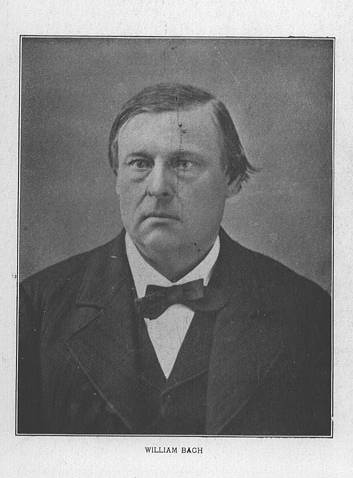
and Attorneys Nichols, Pierpont, Reed, Woodin and Bach were retained by them. These
gentlemen secured the able assistance of E. G. Ryan, later chief justice and the
case came before the supreme court in the January term under habeas corpus
proceedings, the claim being made that the draft was void as outside any legal
authority. The court, however, sustained the United States and decided the draft
to be proper. The case is know as In Re Greiner and is found in the 16th Wisconsin
at page 423.
Hardly had the excitement aroused by the first draft passed away when a second one
was ordered. Citizens of Manitowoc met on July 21st and formed a draft club, of
which Joseph Vilas was chosen president and treasurer and H. F. Hubbard secretary.
Each member paid in fifty dollars, and received $300 if drafted, with which he
might purchase a substitute, if he so desired. This second draft took place at
Green Bay on November 23rd and was attended by the Manitowoc County Board. The
county's quota was 388 men, not all of which was raised however, although under J.
F. Guyles, who had been chosen provost marshal of the county, an efficient police
system was organized. This having passed, another draft was announced to take
place at Green Bay on Jan. 25th. At its December session the county board by
resolution instructed J. Pellet, J. Carey and A. Wittmann to represent Manitowoc
interests at the proceeding and these gentlemen accordingly attended. The quota
of the county at this draft was 232 men, which also was not even approximately
P 125
reached. In the meantime the practice of raising bounty funds increased. The town
of Manitowoc voted $100 per recruit on Feb. 1, 1864, while at about the same time
Two Rivers raised $5000 for the same purpose, Mishicott $3000, while Manitowoc
Rapids offered $125 and Cato $100 per recruit. These grants were later legalized
by the state legislature. In August 1864 the quota for the next draft, which was
announced for the next month, was published as follows:--Two Creeks 13, Cooperstown
53, Maple Grove 34, Kossuth 60, Mishicot 34, Gibson 38, Franklin 36, Two Rivers 54,
Manitowoc 61, Rockland 16, Centerville 33, Meeme 39, Schleswig 12, Eaton 32,
Newton 34, Cato 25, Liberty 48 and Rapids 45. Excitement was intense and at an
election held in Manitowoc on the 26th a proposition to vote a village bounty of
$200 per recruit was defeated by 93 majority. Superhuman efforts were made,
however, both there and at Two Rivers so that before the 28th of September, the
date of the draft, the quotas of these towns were filled. In the former place this
result was accomplished largely by a second draft club, which was formed with G. N.
Woodin as president and A. Wittmann as secretary, each member being required to pay
in twenty dollars. In the rest of the county the draft bore most heavily, there
being no means of obviating its hardships. Feeling ran so high in Two Creeks that
a recruiting officer barely escaped being mobbed. The draft took place at Green
Bay as usual and there were present A. Wittmann and the county board. The drawing
did not fill the quota and a supplementary draft took place on December 22nd for
all towns except Manitowoc, Two Rivers and Centerville, which had furnished the
required number. By this time the list of those not exempt had been exhausted in
Eaton and Franklin and the same condition was rapidly approaching in the other
towns, only two or three dozen eligible men remaining in each. Then followed the
announcement of what proved to be the final draft. The town of Manitowoc upon
hearing the news voted at a special election held January 2, 1865 the sum of
$12,000 as bounty money, paying $300 per recruit, one of the largest local bounties
in the state. The bounty club was also
P 126
reorganized. In February a mass meeting was held to raise still more money and
Joseph Vilas, J. D. Markham, T. C. Shove, S. A. Wood and E. K. Rand succeeded in
doing so, earning the gratitude of their fellow citizens. The first named was
presented with a valuable tobacco box by his admirers after the war closed in
appreciation of the services rendered during these troublous times.
The quota for the last draft was finally announced as follows:--Manitowoc 59,
Rapids 35, Meeme 11, Cato 20, Rockland 15, Centerville 25, Liberty 24, Newton 10,
Schleswig 12, Two Creeks 4, Mishicot 8, Gibson 28, Cooperstown 37, Maple Grove 10,
Kossuth 6 and Two Rivers 54, that of Franklin and Eaton having already been
exhausted. The war, however, came to a close before it was necessary to rendezvous
those drawn in April 1865. Captain F. Borcherdt, then marshal of the county,
received orders to arrest no more deserters.
During the last two years of the war there were organized several companies in
the county that took the field for their country. In 1864 recruiting went on
actively for the Forty-Fifth regiment of which in October Henry F. Belitz of Kiel
was chosen colonel. Company B came largely from the towns of Centerville and
Newton, being commanded by Capt. Jacob Leiser, while many were in Co. D also.
Among the other Manitowoc county men acting as officers in the regiment were
Captains C. H. Schmidt of Co. E, Reinhard Schlichting of Co. A, Bernard Schlichting
of Co. C and Lieuts. C. Kerten of Co. C, Charles White of Co. D and Peter Ruppenthal
of Co. A. The regiment was sent to Nashville in the fall and was disbanded in July
1865. In February of that latter year the Forty-Eight regiment rendezvoused at
Milwaukee, in it being Co. D, Captain A. Wittmann, containing men from Two Rivers
and other parts of the county. The regiment was dispatched to Kansas and served in
garrison and scout duties until February 1866, when it was mustered out. A few
recruits from the county were also enlisted in the Fifty-Second regiment, Captain
S. W. Smith commanding Co. D. This regiment got as far as St. Louis but was there
returned and soon after disbanded.
P 127
Thus was the bloody struggle brought to a close. Manitowoc county had furnished
nine full companies and parts of three others, about twelve hundred men in all
besides those who enlisted independently in various organizations or as engineers,
cavalrymen or artillerymen. All through 1865 and even in the spring of the next
year the blue-coated veterans came straggling home and warm was their welcome. A
festival had taken place in the Windiate House in February 1864 in honor of the
return of the three year men and similar functions followed in 1865, among them a
grand reunion given by the Ladies Soldiers' Aid society held in February, one half
of the proceeds of which went for the support of indigent soldiers' families and
the other half to the State Soldiers' Home. A similar affair was held at Two
Rivers a month or so later, five hundred dollars being realized. In fact the work
of the women, who strove to be of service at home, was as heroic as that of the men
in the field. During the war twenty-two large boxes of supplies were forwarded by
the Manitowoc Ladies society and five by the organization in Two Rivers.
Then came the sad and sudden death of Lincoln. Meetings of the returned soldiery
were held immediately for the arrangement of a fitting commemoration of his life
and on April 29th one of the most imposing ceremonies that the village ever
witnessed took place. A procession one mile long was formed in the following
order, marching through the main streets;--I. Manitowoc Brass band; II. Committees;
III. Company of returned soldiers under Captain Goodwin; IV. Hearse and Urn;
V. Village officials; VI. Masons; VII. Odd Fellows; VIII. Sons of Herman;
IX. Good Templars; X. Torrent Engine Company, No. 1, Hook and Ladder Company,
Bucket Co.; XI. School children and ladies. At Union Park Reverend Smith delivered
a funeral oration and the assemblage then broke up. Thus did Manitowoc honor the
memory of the immortal president. Soon after the draft club made its final report,
the total receipts since its formation having been $16,558, of which a balance of
$2038 remained in the treasury. It was first proposed to put this money in the
harbor fund but
P 128
it was later decided to divide it pro rata among the membership. Naturally the
returned soldiers kept up the associations that had so long held them together, the
result being the formation in Manitowoc of a post in July 1868. C. H. Walker was
chosen commander, W. I. Gilbert senior vice commander, John M. Read post adjutant
and A. J. Patchen quartermaster. This organization, however, dissolved in the
course of time and it was not until April 22, 1881, that Horace M. Walker Post No.
18 of the Wisconsin G. A. R. was formed. Since that time it has led an active
existence with a large membership and good equipment. Among the post commanders
have been J. S. Anderson, E. R. Smith, Frank Stirn, Richard McGuire, F. Ostenfeldt,
H. Hentscher, C. E. Spindler, J. F. Reardon, H. Schmidt and J. D. Schuette. Gen.
Lytle Post No. 190 was formed at Kiel on Dec. 27, 1884 and Joseph Rankin Post No.
129 at Two Rivers June 16, 1886. The commanders of the former have been P. Mattes,
F. Krieger, P. Jergenheimer, L. Gutheil, C. Beck and C. Peschke; those of the
latter W. F. Nash, W. Henry, W. Wagner and Louis Hartung. Several local members
have held important positions in the state organization.
Naturally military affairs after the war were given little attention for some
time. In the summer of 1868, however, the Manitowoc Volunteer Militia company was
formed with over sixty members. On August 9th Frederick Becker was chosen captain,
W. H. Hempschemeyer first lieutenant and Henry Schweitzer second lieutenant. It
was made part of the state militia as Company A Second regiment, remaining so
designated until 1894, when it became an independent organization. The twenty-
fifth anniversary of the company was celebrated with great festivities on July 10,
1893, speeches and parades making up the program. The captains of the company from
its formation were F. Becker, A. C. Becker, Emil Schmidt and Henry Schweitzer.
Reorganization took place in the nineties and many of the company went into the new
Rahr Guards, of which Captain Joseph Willinger has been for some time the commander.
An independent company was formed in the seventies among the Polish residents of
North-
P 129
eim, being known as the Pulaski Guards, that formed a brilliant feature on several
public occasions, but they disbanded after a short existence. On December 29,
1881 a new company was organized at Manitowoc under the name of the Rankin Guards.
The first officers were:--Captain W. H. Hempschemeyer, first lieutenant, Ole
Benson; second lieutenant, Emil Baensch. The company soon became incorporated into
the state militia as Company H, Second regiment, and the rivalry between the two
organizations in the city was a healthy one. An event of interest was the
encampment at the county Fair Grounds in August 1886 of the members of the Second
Regiment, ten companies being present. Captain Hempschemeyer was succeeded in
command of Company H by Emil Baensch, he by William Kunz and he by William F.
Brandt. In the nineties William Abel was chosen captain and remained such during
the Spanish-American war. That struggle, suddenly thrust upon the nation for the
sake of humanity, called forth a burst of patriotism among young and old. Manitowoc
was not behind other communities in this respect and the company of soldiers
already in existence in the city was recruited and frequently drilled as the war
clouds grew thicker. Finally late in April came the orders to mobilize the state
troops at Camp Harvey, Milwaukee, and on the 28th Company H left the city amidst
demonstrations of patriotism almost unprecedented. Mustered in at Milwaukee, one
hundred and nine strong on May 5th the troops were transported to Chickamauga Park,
where they remained a month, later being transferred to Charleston, S. C. Here
Captain Abel became seriously ill and command devolved largely upon Lieuts. Knudson
and Stahl. The company, embarking on the transport Grand Duchess, arrived in Ponce,
Porto Rico July 28 and spent a month and a half in arduous service on that isle.
Peace, however, was soon at hand and the Manitowoc guardsmen were with the remainder
of the regiment returned, to the United States, reaching Milwaukee September 17th.
The next morning they were the recipients of an ovation on the part of their fellow
citizens, being tendered a banquet at the Turner Hall and participating in a
P 130
a lengthy parade. All but four of the company returned, Herbert Coville, F. C.
Schwalbe, F. Engel and William Hein giving up their lives for their country. The
progress of the war was watched with great interest by the residents of the county
and its happy termination hailed with joy. Many young men from the county served
in various organizations aside from Company H throughout the struggle and later
several were with the troops in the Philippines, fighting the insurgents. The
Spanish-American War veterans formed Camp Henry W. Lawton on Feb. 10, 1900, with
a membership of forty, the officers being:--commander, Ernst Heide; vice commanders,
M. Jergenson and C. Richards; adjutant, J. C. Jirikowic; quartermaster, Wm. Abel;
chaplain, H. V. Berndt; officer of the day, H. Woerfel; officer of the guard, C.
Schumacher. The first reunion of the camps of the northeastern part of the state
occurred at Manitowoc in July of the following year. In the spring of 1900 a
military company, the Twin City Rifles, was organized at Two Rivers, making its
first public appearance on Memorial day.
Linked inseparably with military heroism is patriotism and it is well that certain
days such as the Fourth of July and Memorial day have been set aside for the proper
commemoration of the past. These have been observed regularly in the county, the
Fourth particularly, from the earliest days. The manner in which that holiday has
been celebrated as the years have passed is most interesting. In antebellum days
speeches, banquets, balls and parades were the order of the hour. The feature of
the Fourth in 1854 was an excursion to Two Rivers, while two years later a grand
celebration was held at Clarks Mills, Judge Lee delivering an address. The program
in 1859 was the first elaborate one given in the county. It opened with a federal
salute and at noon a procession was formed which, marshaled by W. H. McDonald,
I. P. Smith, G. S. Glover, J. P. Barnes and A. L. Pierce, moved to Union Park. In
line were the fire companies, the agricultural societies, school children and
citizens and when the park was reached a bounteous banquet was spread by the ladies
of the Social Circle. The toasts re-
P 131
sponded to were varied and instructive, being as follows:-- "Ladies of Manitowoc,"
"The Day We Celebrate," "The teachers of Our Village." "Our National Anniversary,"
"Italy," "Ladies Social Circle," "Manitowoc and Mississippi Railroad," "The press
and the Union" and "Written on a Shingle- Manitowoc Currency, May it Never Fail."
Celebrations were usually held at Union Park during this early period, although
later Washington Park was the scene of festivities. In 1861 on account of the war
feeling was high and at a celebration at Cato an aged resident was hissed from the
platform for supposed Secession utterances. Because of the close of the war an
outburst of enthusiasm took place on the Fourth in 1865 and Manitowoc was no
exception to the rule. The county board appropriated $300 and with this sum a
banquet was tendered the returned veterans. The feast was held at the National
Hotel and was presided over by Joseph Vilas, toasts being responded to as follows:
"The President," C. E. Esslinger; "Memory of Lincoln," J. D. Markham; "Officers
and Soldiers," C. H. Walker; "The Day We Celebrate," H. Sibree; "The County Board,"
Jason Pellett; "Memory of the Fallen." G. N. Woodin; "The Pres," C. H. Schmidt;
"The clergy, Rev. L. N. Freeman and "The Bar," E. B. Treat. At Two Rivers a
magnificent liberty pole was raised and a lengthy parade formed, after which Rev.
Herman Bartels delivered an oration. In the years succeeding parades were an
annual feature and among the orators were Rev. W. J. Stoutenburgh, J. B. Sherwood,
B. R. Anderson, C. E. Esslinger, A. Wittmann and R. D. Smart. In 1872 the new
railway was utilized and an excursion to Kaukauna successfully enjoyed. Then came
the elaborate celebration of the Centennial Fourth. A monster parade in three
divisions was the feature of the day, John Bibinger, G. F. Barker and P. J. Pierce
acting as marshals. In line were two veterans of the War of 1812, B. Jones and F.
C. Kapple, the Pulaski Guards of Northeim, numerous symbolic floats, fraternal
organizations and the fire departments. Exercises were held in Union Park, C.
Esslinger acting as orator of the day and Reverend C. B. Stevens as
P 132
chaplain. In the evening a public display of fireworks witnessed by hundreds
crowned the glorious day. Two Rivers also commemorated the occasion fittingly.
During the succeeding few years the celebrations were very quiet and each community
in the county held its own instead of centralizing at the county seat. In 1883 the
celebration at Manitowoc assumed considerable magnitude and again in 1891, in the
later year the city entertaining many visitors from neighboring towns, a magnificent
parade and $1300 display of fireworks being features. Exercises were held in
Washington park and Judge Emil Baensch delivered the oration. Since that year,
however, no great effort has been made to celebrate the day in a public manner.
Memorial day has also, since its institution, been observed with proper ceremonies
in the county. In Manitowoc after 1883 the practice arose of securing outside
orators of repute to address the citizens and among the number who have done so
have been General F. C. Winckler, Colonel Watrous, Senator Spooner, Senator Quarles,
Congressman Esch, Eugene S. Elliot, President S. Plantz of Lawrence University,
Reverend Walter E. Cole, Reverend G. W. Ide and Reverend Fraser. Along the line of
patriotic movements should be noticed the imposing statue placed in 1900 in the
public square at Two Rivers in honor of the soldier dead.