CHAPTERS
I. Descriptive …………………………………………………………1
II. The Indians …………………………………………………………8
III. Early Settlement …………………………………………16
IV. Growth and Foreign Immigration ……32
V. Means of Communication …………………………42
VI. Marine ……………………………………………………………………55
VII. Railroads ……………………………………………………………85
VIII. Military ……………………………………………………………112
IX. Politics ……………………………………………………………133
X. Village and City Government …………167
XI. Churches ……………………………………………………………183
XII. Societies and Organizations …………227
XIII. Education …………………………………………………………243
XIV. The Press …………………………………………………………255
XV. The Professions …………………………………………278
XVI. Banks and Banking …………………………………281
XVII Business and Industry …………………………288
Errata and additions………………………………316
Appendixes ……………………293(A), 294(B), 300(C), 313(D)
Index
P 133 - CHAPTER IX. - POLITICS.
When the territory of Michigan was organized it included what is now the state of
Wisconsin. In the thirties this latter section of the western country was divided
into counties and the whole northeastern part was known as Brown county, what is
now Manitowoc being embraced within its confines. On December 7, 1836, however,
soon after Wisconsin became a separate territory Manitowoc county was constituted,
although not at first including the present towns of Gibson, Cooperstown, Two Creeks
or township 21 of the township of Mishicot, this territory remaining as part of the
original county of Brown until February 1850, when it was annexed. The county seat
of Manitowoc was fixed at Manitowoc Rapids but no definite county government was
established until two years later. In January 1838 an act was passed to the effect
"that the county, contained within the boundary lines of Manitowoc County be and
hereby is set off as a separate town by the name of Conroe and the polls of
election shall be opened at Conroe's Mills." Finally in December the counties of
Manitowoc and Sheboygan were organized by the legislature "for all purposes of
county government," the first election for town and county officers being fixed to
take place on the first Monday in March, 1839 and it was further provided that the
county commissioners of Brown county were to canvass the vote and issue certificates
of election. It remained dependent on the latter county judicially, however, until
1848. Thus Manitowoc became a po-
P 134
litical unit, enabling a study of its political complexity as the varying local,
state and national issues evolved and disappeared. And first as to its attitude
on national questions from the time of its organization until the present day.
NATIONAL POLITICS.
At the outset it should be noted that Manitowoc county as a whole has always under
normal conditions been a Democratic stronghold. The majority of that party has not
been so great as to make changes in political complexion impossible when particular
issues came to the front but the above statement is borne out by a careful investi-
gation of the votes for presidential and congressional candidates. The first
opportunity for a division on national questions was that offered by the election
of a delegate to congress from Wisconsin Territory in 1839. Forty votes were cast
in the county, of which J. B. Doty, the Democratic candidate, received twenty-nine,
while Bennett, the chief opponent, received but nine. In 1841 a delegate was again
to be chosen; the total vote was increased by six, Henry Dodge, the Democratic
candidate receiving twenty-seven as compares with nineteen for J. E. Arnold, the
representative of the Whigs. In 1843 Dodge again carried the county receiving
twenty-nine votes as against three for the Whig candidate, W. Hickok. M. L. Martin,
also a Democrat, in 1845 received forty majority and in 1847 M. W. Strong, Democrat,
received sixty-seven votes to sixty-four received by J. H. Tweedy, Whig, showing a
closer division than had existed theretofore. In fact from 1846 to 1852, by which
time many German Democrats had immigrated to the county, the balance between the
Democrats and Whigs was about even. A year after this last vote for delegate
Wisconsin became a state and Manitowoc was placed in the Third Congressional
district. The presidential election then came on, the first in which Wisconsin
votes could be cast and that Manitowoc was relied on for a Democratic majority is
evinced by the following from the Green Bay Advocate: "Well, as what is wanted is
to carry the state for Cass and Butler if the 'old North county' can't bring it up
P 135
we will call in the aid of our sister, Manitowoc and Calumet - and if all these
don't do we will finally give up all claims." The result in the county was as
follows:---Cass, Democrat, 159; Taylor, Whig, 77; Van Buren, Free Soil, 30; while
the congressional vote was, Doty, Dem., 169; Howe, Whig, 67; Judd, Free Soil, 30.
Two years later Mr. Doty ran for congress again, receiving 420 votes, while 165
went the Harrison C. Hobart, the independent candidate, thus showing a great
increase in the Democratic vote, despite a disaffection led against Mr. Doty by
George Reed and others.
The presidential election of 1852 then approached. Pierce and King the regular
Democratic nominees received a majority of over five hundred above all others, the
vote being as follows: Pierce, 874; Scot, Whig, 209; Hale, Free Soil, 9. The
congressional fight resulted similarly, James B. Macy, Democrat, receiving 843
votes and J. M. Shafter, Whig, 243. In 1854, however, the Democrats of Wisconsin
suffered a schism and as a result in the Third district two candidates were placed
in the field, Turner the straight and Macy the bolting nominee, while Charles
Billingshurst received the united support of the then new Republican party. The
result was a victory for the last named all along the line, the vote in the county
being: Billingshurst 750, Turner, 374, Macy 125. This defection from the
Democratic ranks was due largely to the question of free soil in Kansas and
Nebraska and was not of a continuous character for in 1856 the Democrats appeared
stronger than ever. In the meantime the county had greatly increased in population
and the presidential campaign took on almost modern form. In August a Republican
rally was arranged for in order to make a demonstration against slavery extension,
the call being signed by C. Roeser, C. Esslinger, J. Bennett N. Preston and others,
several of whom had formerly been Democrats. An organization was formed with P. P.
Smith as president and J. Bennett as treasurer and a similar movement headed by R.
Klingholz and H. Baetz took place among the German Republicans, while other clubs
were formed at Rapids and Two Rivers, A. C. Pierce and H. Billings being presidents
of the
P 136
respective organizations. The Democrats were equally active and the result was
that in Manitowoc two monster demonstrations were held by the two parties on
October 11th. People from the rural districts came in with ox teams and a hickory
pole was raised with great acclaim by the Democrats, a Buchanan flag being hoisted
upon it. A parade was then formed, led by the Sheboygan and Schmitz bands and
containing fully fifty wagons full of voters and their families, who proceeded to
the Franklin House, where from the balcony Colonel E. Fox Cooke of Sheboygan
addressed them upon the issues of the day. The Republican demonstration was led
by Colonel K. K. Jones, one of the features of the parade being thirty-two ladies
on horseback while many of the sterner sex rode in the rear decked out in all the
finery of feathers and plumes. Finally the campaign came to an end, Buchanan
carrying the county, his vote being 1907 to Fremont's 1177, Hobart's majority over
Billingshurst being about the same for congress. Mr. Billingshurst carried the
district however, and was returned to Washington, where he continued to represent
his constituents ably. In 1858 Manitowoc county came forward with its first
candidate for congressional honors, William Aldrich of Two Rivers being prominently
before the Republican convention of the district, but he received but six votes
for the honor. Representative Billingshurst was renominated and Charles Larrabee
chosen by the Democrats to be their standard bearer. Both candidates stumped the
county but Billingshurst was defeated, his vote being 1086 and that of his opponent
1698, Larrabee also carrying the district by a heavy majority.
And then came the thrilling and momentous campaign of 1860. When the news of
Douglas' nomination by the northern wing of the Democracy reached Manitowoc on June
24th great rejoicing occurred among the Manitowoc Democrats, among whom were many
who considered "the Little Giant" the greatest statesman of the age. A flag
raising, bonfire, parade and ball were a few of the varied modes of welcome which
the information received, prominent among the participants being E. K. Rand, C. C.
Barnes, T. Robin-
P 137
son, W. D. Hitchcock, H. Berners, A. Wittman, Temple Clark and others. The fact
that at the time Lincoln was not as widely known somewhat dampened the enthusiasm
of the Republicans until later in the campaign, when the candidate began to prove
his worth. The Democrats were, however, not united since several of the prominent
leaders supported the Breckenridge ticket, put up by the southern wing of the party.
Chief among them were H. S. Pierpont and C. Kuehn of Two Rivers, C. W. Fitch,
editor of the Herald and C. A. Reuter of Manitowoc. In choosing delegates to the
congressional convention a compromise was effected whereby Mr. Pierpont, a
Breckenridge and Joseph Vilas, a Douglas Democrat were chosen. The spit was
injected into county politics as well and as the year advanced the chances of
Democratic victory decreased proportionately. However organization was perfected
on both sides and the struggle went on unabated. As early as July the German
Republicans organized a club with H. Baetz as president, followed by the
Scandinavian Republicans, who chose Jacob Halverson as their leader, the Two Rivers
Republican club and finally the Wide Awakes, a Republican organization formed in
Manitowoc, whose distinctive insignia, oilcloth caps and helmets, made them
conspicuous in all public demonstrations. A. Scott Sloan and Judge Larrabee, the
candidates of the Republican and Democratic tickets for congress canvassed the
county thoroughly. At Two Rivers a parade was formed by the supporters of the
former, attended by thirty farmers from Cooperstown carrying "a rail symbolizing
allegiance to Lincoln" and in which many "hard fisted factory operatives" as they
were flatteringly called participated. Democratic clubs were also active and thus
the campaign progressed with parades, speeches and illuminations. Finally the
eventful November day arrived and Manitowoc registered its vote against slavery in
no uncertain manner, breaking over accustomed party lines so to do. Lincoln
received 2041 votes, Douglas 1947 and Breckenridge a meager 9, while for congress
Sloan received 2078 and Larrabee 1948. The vote clearly showed that what
Breckenridge sentiment there had been in the county earlier in the
P 138
year had been dissipated by the threats of secession. The Republicans celebrated
the victory by an enthusiastic demonstration on November 17, in which a parade
headed by Marshal Robert Blake was a feature. The war then broke out and men's
minds necessarily turned from mere politics, all supporting the government in its
struggle for existence. The Republicans, however, did not retain their control
of the county, a fact shown by the election of 1862, in which Wheeler, the
Democratic candidate for congress, received 795 majority over Browne, his
Republican opponent. The county was now in the Fifth district together with
Calumet, Winnebago, Green Lake, Marquette, Waupaca, Outagamie, Brown, Kewaunee,
Door, Oconto and Shawano counties. Both H. S. Pierpont and George Reed were
mentioned as possibilities for congressional honors in the Democratic district
convention of that year, which was presided over by the former.
Opposition to Lincoln grew steadily owing to the length of the war and the
campaign of 1864 was in reality started a year earlier. In February 1863 a
Democratic club was organized at the Courthouse, with the protection of the
constitution as its aim and "Conciliation and Peace" as its motto. Among the
promoters were F. Becker, W. Bach, J. Crowley, A. Bleser, W. M. Nichols, J. E.
Eggers, G. S. Glover, P. J. Blesch, M. Kuhl, R. O'Connor, A. Wittmann and George
Reed, the last named being elected president. Similar clubs were organized
throughout the county also. The movement was met by the Republicans in March in
the formation of the Union club, which met at Klingholz Hall weekly, among the
members being S. A. Wood, J. F. Guyles, Oscar Koch, P. P. Smith, S. W. Smith, Rev.
Mead Holmes and O. H. Carpenter. Many Manitowoc Democrats attended the national
convention of their party held in Chicago in August 1864, which nominated General
McClellan for the presidency. The campaign which followed was a hotly contested
one, although party lines were changed considerably as a result of the war and the
issues arising therefrom. Joseph Vilas was put forward by the local Democrats for
the congressional nomination but received only fourteen votes in the convention
P 139
against twenty-nine for Gabriel Bouck of Oshkosh. The result of the election was
a landslide for the Democrats, the home vote being 2248 for McClellan and 1179 for
Lincoln, the vote of the soldiers in the field somewhat reducing the former's
majority. Colonel Bouck secured a similar lead over Philetus Sawyer in the county,
although the latter carried the district. By 1866 due partially to the latter's
interest in Manitowoc harbor improvements the Republican vote increased to 1737,
Martin, the Democratic candidate receiving 1891 votes.
The campaign of 1868 was a closely contested one in Manitowoc. Seymour and Blair
clubs divided honors as to enthusiasm with Grant and Wilson organizations and
several prominent speakers, including Gov. Fairchild and George B. Smith visited
the county. At the congressional convention Joseph Vilas was nominated on the
first ballot and he carried on the fight with great vigor against Philetus Sawyer,
whom the Republicans had renominated. The vote for president was very close,
Seymour receiving 2640 votes and Grant 2605. For congress, however, Mr. Vilas ran
greatly ahead of his ticket, receiving 3204 votes as against 2043 for Sawyer and
also carrying Calumet, Kewaunee, Marquette and Outagamie counties. He was, however,
defeated in the district as a whole, his total vote being 12431 against Sawyer's
16816. In 1870 another change took place and Sawyer, popular in the county on
account of his championship of the harbor, received 3000 votes, a majority of 1473
over Stringham, his Democratic opponent. By 1872, however, the Democrats had
resumed their control of the situation and were able to put up a strong and
winning fight for Greeley. Another Manitowoc man was in the congressional fight
this time in the person of Henry Baetz, who was the Republican nominee. Manitowoc
by the new apportionment was still in the Fifth district, which now included the
counties of Dodge, Fond du Lac, Manitowoc and Sheboygan. The result of the
election was as follows:--Grant 2289, Greeley 2677; for congress, Eldridge 2526,
Baetz, 2443. Mr. Baetz was also defeated by a heavy majority in the rest of the
district. In 1874 Bur-
P 140
chard, the Democratic nominee for congress, received 3157 votes, Barber, his
opponent, polling only 1923. The next campaign was a memorable one. A Hayes club,
of which A. D. Jones was president was early organized and among the speakers
secured by the Republicans were ex-Governor Salomon and Matt Carpenter. The result
was an overwhelming victory for the Democrats, Tilden receiving 3908 votes to
Hayes' 2700 while Bragg for congress received 3913 against 2692 for G. W. Carter,
his Republican opponent. During the long electoral struggle that followed the
election excitement was intense, the Democrats holding mass meetings in protest
against the final decision of the electoral commission. In 1878 Gen. Bragg secured
another large majority of 1085 for congress over Smith, his opponent, which was
reduced in 1880 to 630 over Colman, Republican.
The presidential campaign of 1880 was somewhat featureless in the county, Gen.
Hancock, the Democratic nominee carrying it by a somewhat reduced majority, his
vote being 3676 while that for Garfield was 2988. Two years later a Manitowoc man
again ran for congress and this time secured the prize. He was Joseph Rankin, a
Democrat and one of the most popular and straightforward men that Wisconsin has
ever sent to national council halls. In the eighties the Fifth district included
Manitowoc, Kewaunee, Sheboygan, Ozaukee, Calumet and Brown counties. Rankin
received 3228 votes in the county and 12,933 in the district, while his opponent,
Howland, received 1483 votes in the county and 6108 in the district. The
Prohibition district convention was held in Manitowoc that year and at the time
about one hundred votes, the maximum of the party's strength, were polled in the
county. In 1884 Congressman Rankin ran again, this time against Charles Luling,
also of Manitowoc and defeated him by a majority of 1353 in the county and 6241 in
the district. As elsewhere in the country the Blaine-Cleveland fight of 1884 was
a bitter one but the latter's majority was very large, the vote being Cleveland
4203, Blaine 2525. Congressman Rankin died early in 1886, greatly lamented at
Washington as well as at his home and it became necessary
P 141
to hold a special election to fill the remainder of his term. Charles Luling was
nominated by the Republicans and Joseph Vilas put forward by Manitowoc Democrats
before their party convention but their claims were rejected, largely through the
action of the Sheboygan delegates. Thomas R. Hudd of Green Bay received the
nomination, the vote being Hudd 16, Vilas 8, Horn 3, Timlin 3. Local Democrats
resented this action of their convention and the result was that Mr. Luling
carried the county, his vote being 2338 as against Hudd's 1586, although the
latter's majority in the district was 3781. Hudd carried the county in the fall
at the regular election, his majority over Kuesterman, his Democratic opponent,
being 1534. The Cleveland administration recognized Manitowoc Democracy by
appointing William A. Walker United States district attorney, that gentleman
thereupon removing to Milwaukee.
The presidential campaign of 1888 in the county was one of great enthusiasm,
parades being frequent. The result was another majority for Cleveland, reduced
somewhat but still substantial, his vote being 4218 against 2713 for Harrison,
127 for Streeter, Prohibitionist, and 19 for Fish, Labor, George Brickner, the
Democratic candidate for congress defeating Kuesterman by about the same majority.
Brickner again carried the county in 1890 by a majority of 1285 over T. Blackstock,
a Republican. In 1892 a long deadlock occurred at the Democratic congressional
convention held at Fond du Lac. The delegates from Manitowoc supported A. J.
Schmitz as did many others but after scores of ballots Owen A. Wells of Fond du Lac
received the nomination. Manitowoc was now in the Sixth district, including the
counties of Marquette, Fond du Lac, Winnebago, Calumet, Waushara and Green Lake.
The Republicans in this campaign placed Emil Baensch in the field for congress.
The result of the campaign was easily discernible by men of political experience
even before the vote had been taken. The feeling against the McKinley tariff bill
was strong and particularly so in the west. The Cleveland landslide was tremendous,
his vote in the county being 4349 as against Har-
P 142
rison's 2276, a majority of 2073. Owing to the popularity of candidate Baensch he
ran about six hundred votes ahead of his ticket, but failed of election in the
district. The county soon underwent a general political change, due perhaps to
the stringency of the times and in 1894 the contest for congress was again close,
Wells receiving 3368 votes while S. A. Cook, the Republican nominee received 2923,
he carrying the district. The Populist party about this time became a factor and
secured many adherents in the two cities of the county, detracting largely from the
Democratic strength. The silver issue then came to the front and many prominent
Democrats, including John Nagle, editor of the Pilot, bolted the Bryan ticket.
This defection spread throughout all portions of the county, causing a great change,
which was doubtless augmented by the able speakers, such as General Bragg, Senator
Quarles and others who were sent to the county to address the citizens. The result
was a Republican victory, the first on national issues since 1860, the vote being
as follows:--McKinley 4431, Bryan 3917, Palmer 163, the last being the Gold
Democratic vote. J. H. Davidson, the Republican nominee for congress, also carried
the county by a majority somewhat smaller over W. F. Gruenewald. In 1898 Mr.
Davidson and J. Stewart were opponents, Davidson losing the county by 206 votes.
In 1900 silver plus expansion was again before the people and Manitowoc county
remained in the Republican column. The local campaign was a hard fought one and
McKinley's majority was somewhat reduced, the vote being as follows:--McKinley
4317, Bryan 4167, Debs 169, Wooley 65, Mallory 4. Congressman Davidson also
carried the county by a majority of 241 over his Democratic opponent, Mr. Watson
of Fond du Lac, and in 1902 he was again re-elected, carrying Manitowoc county by
418 votes over Thomas Patterson. Summarizing it will be seen that the Republicans
have carried the county in but three out of fourteen presidential campaigns, and
in only seven out of twenty-seven congressional struggles.
P 143
STATE POLITICS.
Manitowoc county has voted for governors of the state largely as it voted for
presidents of the nation. It is of interest, however, to note how and by whom
the county has been represented in the legislature and on the state tickets of
the various political organizations. In territorial days Manitowoc was
represented in the council and assembly largely by strangers, mainly from Brown
county. The vote of the county in 1837 was called into question in a contest for
a seat in the council. At this election the county gave J. Dickinson 32 votes
and A.J. Irwin 2. In 1840 J. W. Conroe was elected to the lower house from Brown
county and held the position for several years, being the sole representative from
Manitowoc until statehood was reached. C. V. Arndt of Green Bay, who was a
representative of the Manitowoc interests was shot by another legislator in 1842
and the news of the tragedy created considerable stir when it reached his
constituents. W. H. Bruce, then a resident of the Rapids and a friend of the
murdered man, made a trip to the state capitol in the dead of winter in order, if
possible, to assist in avenging the dastardly act. In 1843 a vote concerning the
adoption of a state government was taken, the vote in the county being 5 for and
6 against the proposition, showing that little interest was taken in the matter
at the time. On August 7, 1846 the question again came up and Manitowoc registered
its vote as 23 for and 4 against the proposition. A constitutional convention was
called in 1847 and Evander M. Soper was sent to represent Manitowoc county. He
served on the committee on banks and banking but otherwise took no prominent part
in the proceedings. The labors of this convention were rejected in the state when
the constitution was put to a popular vote, although it carried the county by a
vote of 96 to 45, Manitowoc also registering her vote against the equal suffrage
of the negro at the time. A second constitutional convention was called as soon
as the work of the first had been rejected and this time the people accepted the
document, Manitowoc county giving 122 votes for and 5 against the proposition. It
was represented in this
P 144
convention together with Sheboygan by Silas Steadman, an old settler of the town of
Sheboygan Falls.
Then followed the first election. Manitowoc was place in the First Senatorial
district together with Brown and Sheboygan counties and H. C. Hobart of Sheboygan
was chosen the first senator, becoming a leading member of the upper house. The
vote for assemblyman resulted in a tie between D. Smith of Mishicot and Ezra
Durgin. K. K. Jones in a letter to the Manitowoc Pilot published in 1860 describes
the first state election in the county as follows:--"Within about three weeks after
my arrival (May 1848) we had an election for a representative to the first state
legislature. Co. Ezra Durgin and the lamented and noble Daniel Smith of Mishicot
were opposing candidates. The result was a tie; a new election was called by John
Plumb, a deputy under sheriff of Brown county. We, the Smith men, denied the
legality of the call and generally staid at home and the Durgin men had it all to
themselves. Next week under a call from the coroner, the late Hubbard, Uncle Dan's
friends went in on their muscle and had an election all alone in their glory. I
believe we claimed more votes cast at our election than theirs. However Col Durgin
took his seat and a very influential and energetic member he made. If Manitowoc
never had a worse one to represent her she may well be proud of them all. The good
old Whip party of those days in the county consisted of James L. Kyle, James Bennett,
Harvey Case, Pliny Pierce, Daniel Smith, Alfred Smith, H. H. Smith, Fred Borcherdt
and perhaps a half dozen others, whom I do not now remember, excepting our friend
McNulty who was then one of us. I was also counted in that squad. Col. Sherwood
used to say he admired our courage but had a poor opinion of or discretion. Yet we
used to make a heap of trouble in your wigwams at every election." At this same
election Dewey, the Democratic nominee for governor, carried the county by twenty
votes over Tweedy his Whig opponent.
Until 1857 Manitowoc was represented in the state senate by men from other
counties, including Samuel Goodel of
P 145
Stockbridge, Theodore Conkey of Appleton, H. N. Smith of Plymouth and David Taylor
of Sheboygan. In the assembly, however, during the same period the county remained
as one of the units of representation. Charles Kuehn was unanimously elected in
the fall of 1848 and the succeeding fall defeated James L. Kyle, the Whig
candidate, by a vote of 182 to 132. In the election of 1850 G. C. O. Malmros
received 229 votes for the position as against 214 cast for J. M. Sprague and 68
for A. W. Preston while in 1851 and 1852 E. Ricker defeated S. B. Sherwood and
B. F. White respectively. In the fall of 1853 the Whigs were victorious, James L.
Kyle receiving 543 and J. M. Sherwood 416 votes, although Barstow the Democratic
candidate for governor carried the county by over 600 majority. In that year also
the county gave 618 votes against and only 319 for the prohibitory liquor law then
before the people. In 1854 a three cornered struggle occurred in the county for a
seat in the lower house. James Bennett was placed in nomination by the newly
organized Republicans, Lyman Emerson by the Democrats and J. M. Sherwood by the
Independent Democrats. Bennett was elected, receiving 616 votes, while Emerson
received but 313 and Sherwood 308. Manitowoc county played an important part in
the formation of the Republican party in the state of Wisconsin during this year.
It may be well said that the organization took definite form at a People's State
convention held in Madison on July 31st. C. Roeser was a delegate to this convention
from the county and was made the candidate of the new party for the position of
state treasurer in 1855, he and Charles Kuehn his successful opponent in that year
being the first men from Manitowoc to attain places on a state ticket of any
political organization. The Democratic majority for governor was 376 and C. H.
Walker, a Democrat, was sent to the assembly by an even larger vote. Charles
Kuehn served two years as state treasurer and made a very efficient officer. By
the new apportionment going into effect in 1856 Manitowoc and Calumet counties
were placed in one senatorial district while the former was divided into two
assembly districts, the first including the towns of Two Rivers,
P 146
Mishicot, Kossuth and Manitowoc while the second comprised the towns of Rapids,
Maple Grove, Franklin, Eaton, Newton, Meeme, Schleswig and Centerville. Both
candidates for senatorial honors in that year were from Manitowoc, Temple Clark the
Democratic nominee defeating O. H. Platt by about 570 votes and in the assembly
districts C. H. Walker and T. Cunningham, both Democrats, were successful. In the
succeeding year these men were followed by H. C. Hamilton and J. B. Dunn, also
followers of Jeffersonian doctrines, Hamilton giving away in 1858 to a Republican,
William Aldrich, the defeat of the regular Democratic candidate being largely due
to the independent candidacy of S. A. Wood, who received 111 votes, thus cutting
down the vote of Temple Clark, the regular candidate of the party, to 741. For
senator S. H. Thurber, a leading merchant, was successful in defeating Dr. Preston,
his Republican opponent. Assemblyman Aldrich soon became very prominent in the
legislature and was highly regarded over the state. The gubernatorial election of
1859 was a hard fought one between Alexander Randall and Harrison C Hobart, the
nominees of the Republican and Democratic parties respectively. Arrangements were
made for a series of joint debates between them during the campaign and Manitowoc
was chosen as the scene of one of the forensic struggles. Mr. Randall was unable
to be present but sent as his representative Carl Schurz, who came to Manitowoc
for the occasion. Each was given an hour and the debate was an event long to be
remembered by all present, it being said that the result might well have been
declared a draw. Hobart was not elected although he carried the county by 1430
majority and both districts sent Democrats to the assembly, Joseph Rankin from the
First and Peter Mulholland from the Second. In 1860 owing to disaffection in the
Democratic camps both returned Republicans, J. L. Fobes representing the First and
Joseph Stephenson the Second, while B. J. Sweet, a Republican from Calumet county
carried the county by over 400 majority for senatorial honors.
Then came another apportionment, the senatorial district, now known as the
Nineteenth, remaining unchanged
P 147
but the county being divided into three assembly districts; the first including
Centerville, Meeme, Schleswig, Eaton, Liberty, Newton and Rockland; the second
Rapids, Cato, Maple Grove, Franklin, Kossuth and Cooperstown and the third
Manitowoc, Two Rivers, Mishicot, Gibson and Two Creeks. In two of the three in
the fall of 1861 Democrats were chosen by small majorities, the favored ones being
J. Cahill of the second and E. K. Rand of the third district. In the first,
however, S. Rounseville a Republican was elected by 8 majority. The vote for
governor was also Democratic that year. Edward Salomon of Manitowoc was the
candidate for the Republicans for the position of lieutenant governor and by the
death of Gov. Harvey in 1862 the former became the chief magistrate of the state,
a position which he held until January 1864, he being one of the first of his
nationality in the western states to hold such high office. In 1862 both Messrs.
Rand and Cahill were reelected by increased majorities and D. Shanahan, a Democrat,
succeeding Mr. Rounseville in the first district while Joseph Vilas, also of that
party, became state senator. In 1863 the Democrats lost ground again, P. P.
Fuessenich a Republican being sent to Madison from the first district, although T.
Thornton and D. Smoke, both Democrats, represented the remainder of the county.
H. S. Pierpont was the Democratic candidate for state bank comptroller in this
campaign but went down in defeat with the others of his party. It was in this
year also that the town of Maple Grove went unanimously Democratic, a feat which
called forth considerable comment and the presentation of a flag on the part of
the Democratic ladies of the county. The campaign of 1864 brought about other
changes, the first and second districts returning Democrats, H. Mulholland and M.
Murphy while the third elected C. B. Daggett of Two Rivers, a Republican. George
Reed secured a gratifying majority for the senatorship and immediately occupied a
prominent place in state affairs. He held the place six years, being reelected by
large majorities in 1866 and 1868 and was particularly valuable as a member of the
committees on finance and banking. In the fall of 1865 the state decided
P 148
the question of negro suffrage, the vote in the county being 840 for and 1858
against the proposition. In the first district that fall three candidates were in
the field, H. Mulholland, P. J. Pierce and N. Dittmar, the first two being
Democrats and the last named a Republican. The result was that Dittmar was elected
although the send and third districts returned Democrats, William Eatough and David
Smoke.
No changes were made by the apportionment of 1866 as far as the county was
concerned. Mr. Dittmar was reelected in the first and M. Murphy and T. Robinson
chosen in the second and third districts. In the next year John H. Bohne, Richard
Donovan and David Smoke, all Democrats, represented the various districts and a
strong majority was registered for Tallmadge, the Democratic nominee for governor
as against Fairchild. In the fall of 1868 the representatives from the first and
second districts were reelected but in the third J. L. Fobes, a Republican,
defeated D. Smoke by sixty votes. A year later Henry Baetz was chosen by the
Republicans as their candidate for state treasurer and was elected, although the
county of his residence went Democratic. Three Democratic assembly men, John
Barth, Michael Fitzgerald and C. H. Schmidt were also chosen. The political
struggle for legislative positions in 1870 was a bitter one. Three candidates for
senatorial honors were place in the field, J. Carey by the Republicans, although
he had been and was later a Democrat, W. Bach by the People's party and C. H.
Schmidt by the Democrats. Schmidt was elected, receiving 2141 votes to Carey's
1411 and Bach's 1011, and was reelected two years later by a somewhat smaller
majority, the number of the district then being changed to the Fifteenth, which it
has since remained. For the assembly S. Samuelson, a Republican was successful
in the first district, M. Fitzgerald was reelected in the second and Joseph Rankin
chosen in the third. Assemblyman Rankin was again honored in 1871 but Samuelson
gave way to Peter Reuther, another Republican, and Fitzgerald to Martin McNamara,
a Democrat. A year later there were elected C. R. Zorn, O. S.
P 149
Davis and J. Rankin and in 1873 W. R. Taylor the Democratic nominee for governor
secured a large majority and in all three assembly districts Democrats were chosen
to the assembly, C. R. Zorn, B. S. Lorrigan and Joseph Rankin, the majority of the
last named being over 800. John Schuette was the next incumbent of the senatorial
position, defeating Joseph Vilas in a hard fought contest in 1874. B. Lorrigan
was reelected in the second assembly district but C. R. Zorn was superseded in the
first by Fred Schmitz, a Newton Democrat, while in the third R. D. Smart, a
Republican was selected. The next year Democrats were chosen to fill all the
positions, the winning candidates being C. R. Zorn, T. Mohr and William Tisch.
Senator Schuette was one of the Republicans who supported Don A. Cameron in the
heated struggle for the United States senatorship and did much to make that
statesman's election possible.
The apportionment of 1876 changed the outlines of the assembly districts of the
county considerably, Cato, Maple Grove and Franklin being taken from the second
and added to the first, Centerville and Newton from the first and added to the
third, Rapids from the second and added to the third and Gibson, Two Rivers, Two
Creeks and Mishicot changed from the third to the second. Thus constituted the
first district returned Thomas Thornton, a Democrat, the second Thomas Mohr,
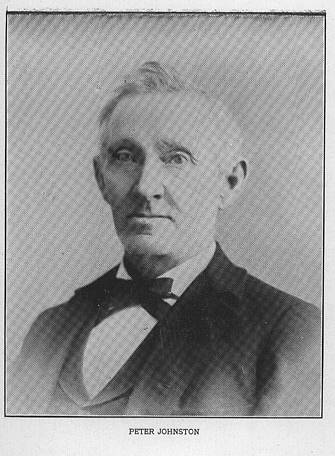
another Democrat and the third Peter Johnston, a Republican. Senator Schuette ran
again but was defeated by Joseph Rankin, who remained the representative of the
Fifteenth for six years thereafter, defeating Charles Luling in 1878 and H. H.
Smith in 1880. Senator Rankin gained an enviable reputation at Madison, one which
later lifted him into a seat in the national council chamber. He was chairman of
the Democratic state central committee for two years during his incumbency as a
state official. In 1877 Manitowoc gave 600 majority for the Democratic candidate
for governor, J. A. Mallory and chose three men of the same faith to represent it
in the assembly, Thomas Thornton, W. F. Nash and Henry Vits. John Carey, Demo-
P 150
crat, became the representative of the first district a year later, another
Democrat, William Zander in the second and a Republican, W. H. Hempschemeyer in
the third. Carey and Hempschemeyer were reelected in 1879 but F. Pfunder, a
Democrat, succeeded Zander in the second. In 1880 a new set of men were sent to
Madison, Thomas Gleeson from the first, Ira P. Smith from the second and C. E.
Estabrook from the third, all Democrats but the last named. He was reelected a
year later, but Gleeson gave way to Peter Phillips, a Republican and Smith to
Henry Goedgen, a Democrat. In 1882 since Senator Rankin was running for congress
it became necessary to choose his successor. The Republicans placed D. Nottage of
Two Rivers in nomination, the Democrats J. Carey and the Prohibitionists E. J.
Smalley. Carey winning by over 500 votes. He remained in office until his death
in 1887, being reelected in 1884 and 1886. The assemblymen elected with Carey in
1882 were J. Miller, H. Goedgen and W. T. Albers, all Democrats. The first
district reelected their representative in 1884 but Messrs. Goedgen and Albers
were succeeded by John Robinson, Democrat and C. E. Estabrook, Republican, the
latter defeating his Democratic opponent, John Franz by a close margin of four
votes. By this time the elections for governor was changed to the even years and
the assemblymen were elected as the senators had been formerly, that is to say
biennially, while the senators were chosen every four years. In 1885 Manitowoc
was quite prominent in state politics, C. E. Estabrook being chosen attorney
general as the candidate of the Republicans and W. A. Walker acting as chairman of
the Democratic state central committee. To the assembly the three districts sent
D. Tracy, Isaac Craite and Reinhardt Rahr, all Democrats.
According to the apportionment which went into effect in that year Manitowoc and
Kewaunee counties were combined in one senatorial district and W. F. Nash of Two
Rivers a strong Democrat, was elected in 1888 by a large majority over C. F.
Smalley. In the assembly apportionment the three districts were retained but many
changes made, Centerville being transferred from the third to the first and Maple
Grove
P 151
and Franklin from the first to the second, thus reducing the third district to
Manitowoc, Rapids and Newton. The towns of Franklin and Carlton in Kewaunee county
were also made a part of the second district. In the first district, thus
constituted, E. P. Scheibe, a Democrat, was chosen, in the second Isaac Craite
reelected and in the third J. S. Anderson, a Republican, selected. In 1890 the
Bennett law, compelling public school education, was an issue in Wisconsin and
feeling among the supporters of the parochial institutions ran high. The result in
Manitowoc county was a phenomenal majority of 2182 for George W. Peck as against
W. D. Hoard for governor, a most sweeping Democratic victory and for the assembly
three Democrats were also chosen by large majorities, P. J. Conway, J. P. Nolan and
William Croll. Then by the apportionment of 1892 Calumet was again attached to
Manitowoc instead of Kewaunee and the number of assembly districts was reduced to
two, the first including the towns of Centerville, Cato, Eaton, Liberty, Meeme,
Rockland, Schleswig, Rapids Kossuth, Franklin, Maple Grove and Newton and the
second comprising Manitowoc, Two Rivers, Mishicot, Two Creeks, Gibson and
Cooperstown. Senator Nash held office until 1894, being succeeded by J. McMullen
of Calumet county. In 1892 P. J. Conway and W. Croll were returned as assemblymen
and two years later the latter was reelected although Mr. Conway was succeeded by
F. C. Maertz, another Democrat. In that year, (1894) Manitowoc was well represented
on state tickets, both the candidates of the Republican and Democratic parties for
the office of lieutenant governor, Emil Baensch and A. J. Schmitz, being residents
of the city. The vote for lieutenant governor in the county was Baensch 3223,
Schmitz 3165, the former running several hundred votes ahead of his ticket and
being successful in the state as well, securing an office which he held with great
credit to himself for four years. Henry Stolze received 356 votes in the county.
The Republicans gaining control another apportionment took place in 1896, Cato,
Centerville, Liberty, Meeme, Rapids, Newton and Manitowoc composing the first and
the rest of
P 152
the county the second district. Charles W. Sweeting, a Republican, was chosen to
represent the first and Mr. Maertz was reelected by his constituents in the second
district that year. In 1898 Sweeting was succeeded by Joseph Willott, another
Republican, who was again elected in 1900, while in the second district Jonas
Gagnon of Two Rivers was chosen twice to serve its interests. For the senate the
choice fell upon Norman A. Knudson, a young Republican who gained the district by
19 majority. The apportionment of 1901 left the assembly districts unchanged with
the exception of the transfer of the town of Cato from the first to the second
district. Among the candidates for state offices in 1900 were George Dicke of Two
Rivers and Max Goeres of Kiel, the nominees of the Social Democracy for the
positions of lieutenant governor and insurance commissioner respectively.
Joseph Willott succeeded himself as assemblyman in 1902 while Mr. Gagnon made way
for another Democrat, N. Terens of Mishicot. Senator Knudson not being a candidate
for reelection, W. A. Knauf of Chilton was placed in the field by the Republicans
while Samuel Randolph, Jr. was nominated by the Democrats. The latter carried both
counties by a close vote and was consequently the chosen representative of the
district in the Senate. For governor however the county registered its preference
for Robert M. LaFollette. The Social Democratic vote of this year was considerable,
amounting to over four hundred, and the county was represented on the state ticket
of the organization.
COUNTY POLITICS.
As was stated before the county of Manitowoc was organized as a separate political
unit for all except judicial purposes in December 1838. The first election was
held accordingly on March 4 1839 at the residence of P. P. Pierce near the village
of Rapids. O. C. Hubbard and Horace Conroe were judges of the election and Peter
Johnston and J. F. Este clerks. Two parties were in evidence even in this primeval
community, the one composed of the partisans of B. Jones, who resided at the mouth
of the river and the other made up
P 153
of Conroe's followers. There were only thirty-five votes cast and as the Conroe
party numbered seventeen their ticket was chosen as follows:--County commissioners,
Horace Conroe, J. G. Conroe, J. Rigby; assessor, O. C. Hubbard; register of deeds,
J. W. Conroe; collector, Peter Johnston. Under the law then in existence the
county commissioners corresponded to the present county board but were elected
from the county as a whole, - a system which obtained in Wisconsin until 1849 and
again from 1861 to 1870. The office of collector corresponded to the modern county
treasurer. The other county officers such as sheriff, district attorney, clerk of
the court and county judge did not become necessary until Manitowoc was organized
judicially while the county clerk was chosen by the commissioners. These later met
first on March 15, choosing J. W. Conroe as clerk and J. G. Conroe chairman. The
principal business was the appointment of three constables, Joseph Estes, W. Flinn
and Chauncey Calhoun. At about the same time the legislature of the territory
changed the name of the township from Conroe back to Manitowoc and provided that
polls should be established at the steam sawmill at the Rapids and at "the public
house" at the mouth of the Manitowoc River. In May two precincts were laid out,
W. T. Sheppard, S. C. Chase and John Glap being chosen judges of election in the
Two Rivers and J. W. Conroe, H. McAllister and B. Jones in the Manitowoc precinct.
Thus was the county legally established and in 1840 J. W. Conroe constructed a one
story county and town house at the northern limits of the village of Rapids, it
being 24 by 38 feet in dimensions. This structure remained for twelve years the
seat of government. For ten years the county board was composed of three members,
one retiring annually. The principal business before that body was the laying out
of roads and school districts and the appointment of constables and other minor
officials. Among the later were Constables D. S. Munger, S. Peake, E. L. Abbott,
J. Holsted, H. B. Edson, J. Edwards, F. Laduke, and L. D. Sackett; Tax Collectors
K. S. Munger, E. D. Beardsley, P. P. Smith and Evander Soper. The county was
sparsely populated and little gov-
P 154
ernment, even of a local nature, was needed for some time, the work done being
largely ministerial. The men who composed the board were, however, leaders in
the community and served their constituents well. In October 1839 Horace and
J. L. Conroe were succeeded by Benjamin Jones and Joseph Edwards, showing that
"the mouth" was in the ascendant, although a year later J. G. Conroe was returned
instead of J. Edwards while Rigny, one of the first board after several year's
service gave way to R. M. Eberts, the founder of Two Rivers. No change in the
personnel of the board then occurred until 1842 when Conroe was succeeded by
Oliver Clawson and in 1843 Eberts gave way to H. McAllister, who was soon
succeeded, however, by Evander M. Soper, while Joel R. Smith succeeded Benjamin
Jones. In 1844 A. Hoyt took the place formerly held by Evander Soper and the next
year H. H. Champlin that of O. C. Hubbard, who had served one year instead of Mr.
Clawson, the latter however again giving way in 1846 to Daniel Smith of Mishicot.
In 1847 the board was made up of Oliver Clawson, Daniel Smith and Charles
McAllister, the first named followed by E. M. Soper the next year. The last board
under this county system of representation was elected in the fall of 1848 and
consisted of J. M. Sprague, Albert Wheeler and Peter Poh.
The year 1848 witnessed several important changes in the county government. The
county officials, who prior to this time had been appointed or elected annually
were now to hold for two years. The township county board system, which had been
optional in Wisconsin Territory since 1841, was now made compulsory and finally by
legislative act of March 2, 1848 Manitowoc county was judicially separated from
Brown county, the act taking effect after the second Tuesday in April. The county
was made a part of the Third Judicial Circuit under Judge A. W. Stow and it was
ordered that proper rooms should be provided for the court at an expense of not
exceeding $100 per year. The first term of court was held by Judge Stow on
September 15 1848. O. C. Hubbard was chosen sheriff and E. Ricker clerk to act
until the first of the following year; E. H. Ellis, J. W. Colby and
P 155
J. L. Kyle were admitted to the bar and an indictment was found for trespass on
state lands. The records having to do with the county were removed to the Rapids
from Green Bay also in this year, the work being under the direction of John P.
Champlin. In the fall the first biennial election for county officers took place.
Several candidates were frequently in the field for the same office in these early
days and the personal more than the partisan element predominated for some time.
In fact it may be said that it was not until 1854 that the various candidates for
local office generally aligned themselves under the banner of some political party.
The officers chosen in this first election were as follows:--Sheriff, George W.
Durgin; county treasurer, Pliny Pierce; register of deeds, A. W. Preston; county
clerk, E. H. Ellis; clerk of court, Ezekiel Ricker; surveyor, E. D. Beardsley;
coroner, Joseph Edwards; county judge, J. H. W. Colby. Elections were held in the
odd years for several of the offices at the beginning and thus it was that in 1849
Adam Bleser became treasurer and P. P. Smith clerk of court. In the same year a
jail was built at a cost of $2355.
By the county organization formed in 1848 four townships, Manitowoc, Manitowoc
Rapids, Two Rivers and Meeme were set off and the first session of the county board
occurred June 28, 1849, the members being Andrew J. Vieau of Manitowoc, John
Stewart of Two Rivers, Charles McAllister of Rapids and T. Cunningham of Meeme. The
polls in the four towns were respectively as follows;--The American House, the home
of Sebastian Boldus, the Courthouse and the home of H. B. Edson. Early in 1850 the
towns of Newton and Centerville were formed, the first election being held in
private houses and in the fall Maple Grove was added. The first representatives
from these towns were:--Centerville, Charles Koehler; Newton, F. Hacker and Maple
Grove, M. C. Brown. In 1850 a full set of county officers were elected with the
exception of county clerk, that official being chosen in the odd years until 1883.
It was in this year also that the legislature added the slice of territory,
P 156
now composing the northern tier of townships, to the county. The towns of Kossuth
and Eaton, or as it was first called, Valders, were formed in 1851 with William
Eatough and George Monroe as their first representatives, Kossuth being set off
from Rapids. The board at about this time adopted the county poor farm system
which continued in use for over ten years when the more popular township system of
maintenance supplanted it. Little interest was shown in the political campaign of
1852, most of the officers being elected unanimously or as independent candidates.
In this year the county suffered a serious loss in the burning of the courthouse at
the Rapids. The fire was set on April 30th by an insane man named Benjamin E. Lynde,
who was confined in the jail and both the structures were a total loss, although
the records were fortunately saved. The fire and the fact that Manitowoc had by
far outstripped Rapids led to the agitation for the removal of the county seat to
the former place. The matter came to a vote on April 14, 1853 in accordance with
legislative permission granted a month earlier. Ten townships registered their
opinion in the matter, Mishicot, or as it was first called, Saxonburgh, having been
organized with F. Borcherdt as chairman late in 1852. The vote resulted in an
overwhelming majority in favor of the change, being as follows:--
Town For Against
Manitowoc 278 2
Eaton 24 0
Rapids 8 52
Newton 74 1
Kossuth 71 4
Meeme 41 1
Centreville 2 0
Two Rivers No returns
Mishicot "
Maple Grove "
_____ ______
Total 498 60
P 157
Strange to say, however, the battle was only half over when the removal was
decided upon for the question immediately arose on which side of the river the
structure should be placed. The people residing on the north side suggested Union
Park but the site finally chosen on South Eight Street was a strong competitor
from the first. The legislature of 1853 authorized a loan with which the building
should be erected at a cost of not to exceed $5000, which sum was raised to $10,00
two years later after several public meetings had been held to consider the wisdom
of the increase for the proposition had met with considerable opposition. Delays
followed and for three years the question of a site was a mooted one in village
politics. Finally, however, the south side triumphed and in 1857 the courthouse
was constructed, John Meyer being the architect. An attempt had been made at
construction a year or two before under the direction of a building committee but
a defect had been found in the foundation and a new committee, consisting of
G. Lee, E. D. Beardsley and S. Hill was appointed under whose direction the work
was completed.
The campaign of 1854 was a most bitter one. By this time the Republican party was
a factor and many who had formerly been Democrats flocked to the new organization.
To make matters more complicated a well defined movement of defection occurred in
the Democratic ranks. The county convention of the party was a scene of discord
and after it was over independent nominees were placed in the field for the offices
of county treasurer, district attorney and sheriff. The Republicans thus succeeded
in electing their entire ticket with the exception of the register of deeds. The
vote is an interesting one as illustrating that men and not the party was the
principle of division at the time. It was as follows:
Office Rep. Dem. Ind.
Sheriff F. W. Adams 536 A. McCullom 369 S. Carpenter 338
Treas. G. Kremers 682 W. Bach 520 S. Kelley 58
Register of deeds F. Salomon 481 A. N. Baker 755
P. 158
District attorney W. Hamilton 836 N. Wollmer 394
Surveyor F. Armsby 1248
Coroner S. Bates 881 A. Preston 581
County clerk C. Roeser 714 C. A. Reuter 506
The Democratic party in the county soon, however, recovered from its internal
dissensions and in 1855 elected C. A. Reuter, their candidate for clerk of court
by a large majority, while in 1856 they were victorious all along the line,
notwithstanding the fact that there were independent candidates for both the
offices of sheriff and county clerk. In 1855 the town of Schleswig, or as it was
first known, Abel, was formed and H. F. Belitz chosen as its first representative
in the county board. Cooperstown, Rockland and Franklin were also set off soon
after, being represented respectively by J. R. Weber, Louis Faulhaber and Alanson
Hickok. In 1857 the various wards of the village of Two Rivers and Manitowoc were
recognized as units of representation in the board, there being at that time three
such divisions in Manitowoc, although the first and third together were given but
one supervisor at first, and two in Two Rivers. Thereafter as the towns grew each
ward was given representation as it came into existence, thus preserving the
balance between the rural and urban interests. In early judicial affairs politics
were largely tabooed. Judge Gorsline received the almost unanimous support of the
county in the spring of 1856 for the circuit bench and at his resignation the year
following Judge David Taylor of Sheboygan was appointed. At this time Kewaunee
county was attached to Manitowoc for judicial purposes. As county judges the
successors of Ezekiel Ricker whose death occurred in 1854 were George Reed who
resigned, then George C. Lee who also relinquished the office after a short
incumbency, Isaac Parrish, who served until 1858 and Charles H. Walker who defeated
Parrish for reelection by a majority of 1013 votes.
The Democrats retained their power in 1857 when they elected their candidate for
clerk of court and in 1858 when al-
Page 159
most the whole county ticket was victorious. During the latter campaign there was
again disaffection in the ranks, not sufficient to change the result at the polls
however. Prominent among the bolters, were Co. Sherwood, G. W. Barker, W. F.
Eldredge, William Eatough, M. Playfair and Patrick Flynn and they place D. H. Van
Valkenburgh in the field as sheriff against Louis Kemper, the regular Democratic
nominee and A. N. Baker as register of deeds against Jere Crowley. The votes for
these two independent candidates, however, did not much exceed one hundred,
although Baker's vote caused the election of Henry Baetz, the Republican nominee
for register of deeds. On the other hand the Democrats secured almost exclusive
control of the county board, all but five of the members being followers of the
party. In 1858 Cato, Gibson and Liberty, the last first known as Buchanan, were
created and given representation in the board, the first chairmen of the towns
being Alanson Hickok, Jason Pellett and Ole Oleson. Finally in 1860 the town of
Two Creeks, first called Rowley after an earlier settler, was set off it being the
last of the eighteen townships to come into existence. H. Luebke was its first
supervisor. In that year also the county board authorized the building of a brick
structure for the county offices, as an annex to the courthouse. B. Jones secured
the contract for $5000 and the building was erected on the southeast corner of the
square. The year 1860 witnessed more factional strife and bitter contests in
county politics, the campaign being perhaps the most virulent in Manitowoc's
history. At the Democratic convention the trouble first began to show itself,
largely from the fact that some, among them Editor Crowley of the Pilot, openly
asserted that the gathering was in the hands of the Breckenridge followers and
that they were trading with the Republicans. Judge Pierpont, as leader of the
Breckenridge supporters, presided over the convention and Reuter, the regular
nominee of the party for treasurer, was also of that faction. The result was
that the bolters placed M. Kuhl in nomination for the position of county treasurer
as opposed to Reuter and P. Hogan to oppose Alanson Hickok, the regular nom-
P 160
inee for county clerk. Thus handicapped the Democrats went into the struggle
against the Republicans and the result was a defeat in the case of every nominee
by majorities ranging from two to seven hundred. Candidate Kuhl developed a
remarkable strength, considering that he was an independent nominee, receiving
786 votes while Reuter received 1260 and his victorious Republican opponent,
O. Koch 1907. S. A. Wood, the Democratic candidate for district attorney was about
the only one on the ticket that secured anywhere near the regular party strength.
The war then beginning led to many changes in local politics. The Breckenridge and
Douglas Democrats drew together gradually and this fact, allied to that of the
opposition of H. S. Pierpont to harbor taxes led to his election to the office of
county judge in the spring of 1861. In the meanwhile the Union Democrats,
including such men as Henry Sibree, Lyman Emerson and others joined the Republicans
on all issues and gradually became an integral part of the party. In the fall of
that year Conrad Bates was put forward as the Union candidate for clerk of court
but was defeated by Jere Crowley, his Democratic opponent by 192 votes. The first
election of a county school superintendent also occurred at this time, B. J. Van
Valkenburgh, the Democratic nominee defeating Fred Borcherdt, whom the Unionists
supported.
By this time another change had been made in the system of county government in
the state. By act of March 28, 1861 the county boards were made to consist of
three supervisors, one elected from each assembly district, while the chairmen of
the towns retained only such functions as pertained to the equalization of taxes.
Under this law the first district John Carey, Democrat defeated F. R. Gutheil,
Union. The board met in the spring of 1862 and elected Mr. Emerson president but
soon both he and Supervisor Sorenson resigned, necessitating the calling of a
special election, which resulted in the choice of Alanson
P 161
Hickok in the second and Jason Pellett in the third district, both being Democrats.
J. O'Hearn succeeded Hickok in November 1863 and as thus constituted the board
continued to exist until 1866. The campaign of 1862 was somewhat of a complicated
one. Men that had recently changed political allegiance were placed on tickets in
strange companionship and the result was a remarkable divergence in the number of
votes received by the candidates for different offices. There was no open bolting,
however, and the Democrats elected all their officers except the county treasurer
for which position Oscar Koch defeated H. S. Pierpont by a narrow majority. As the
war proceeded the Democratic party continued to grow stronger in the county, only
the towns of Manitowoc, Kossuth, Gibson, Liberty, Eaton and Rockland giving
majorities for the Republican ticket in 1862, of which three, Kossuth, Gibson and
Liberty, went over to the opponents a year later. During the war a number of
resignations occurred among the county officers due to enlistments for military
service, among the number being Sheriff Murphy, superintendent of Schools Van
Valkenburgh, County Judge Walker and Register of Deeds Baetz.
In 1863, 1864 and 1865 the Democratic county tickets were entirely successful by
large majorities, due partially to the fact that many of the Republican candidates
were former Democrats. In the fall of 1865 a new county board was chosen consisting
of F. Schmitz, B. S. Lorrigan and G. Damler, who administered affairs ably. After
the war had closed the Republicans regained considerable strength and in the fall
of 1866 succeeded in electing Henry Baetz as county treasurer, besides making a
very respectable showing in the contest for the other offices. The following fall
according to an amendment of the county supervisor law a supervisor at large from
the county as a whole was chosen to sit in the county board, the Democratic
candidate, J. S. Eggers, carrying the election by seven hundred majority over C. W.
White. Messrs. Gallogly, Mohr and Koehnke were also added to that body from the
first, second and third districts respectively by virtue of another amendment to
the law, which increased its total
P 162
membership to seven, this action being taken for fear that dictatorship might be
the result of too close a corporation. The board thus constituted remained in
office until 1870 when a return to the system, whereby each township was
represented by a supervisor, was made.
The county election of 1868 was another close contest. The Republicans developed
considerable strength, reelecting Henry Baetz as treasurer and putting in office
P. P. Fuessenich as county clerk and Fayette Armsby as surveyor while the
Democrats elected the rest of the ticket. In the spring of that year Judge Taylor,
the Democratic candidate for the circuit bench had also been defeated by Campbell
McLain. On the other hand W. W. Waldo was chosen county judge by 2500 majority
over H. Sibree, the Republican candidate, in the judicial election of 1869 while
Democratic successes in the fall also presaged a change. The campaign of 1870 was
nevertheless a very bitter one. This time both the Democratic and Republican
camps suffered defections in the form of a third or People's party movement. This
faction placed Ira P. Smith in nomination for sheriff, A. Chloupek for treasurer,
J. Garry for register of deeds, G. A. Woodin for district attorney and J. Oswald
for coroner, endorsing J. Thombs, the Democratic nominee for county clerk. The
result of the election was unsatisfactory to all, the division of offices being
about even. Quirin Ewen, P. P. Fussenich and F. Armsby, Republican nominees for
treasurer, county clerk and surveyor were successful while from among the Democrats
John Franz, A. Wittenberg, E. B. Treat and F. Simon secured the positions of
register of deeds, sheriff, district attorney and coroner. Then came the
Fuessenich scandal, the only deep blot on the history of Manitowoc politics, which
had an injurious effect on Republican success for many years as well as casting a
shadow on several leading Democratic politicians. Rumors that P. P. Fuessenich,
the county clerk had not been using honest methods in the discharge of his duties
led to an investigation early in 1871 and it was revealed by a committee of the
county board, appointed to investigate the matter, that for six years a system of
illegal
P 163
appropriation of public funds had been going on. It was proved that over $20,000
of the county money had thus been squandered and it came to light that Fuessenich,
the chief offender had made away with other sums besides. Before hearing the
testimony the clerk handed in his resignation and fled the country, nothing further
ever being heard from him. The matter created much excitement at the time and led
to the institution of many reforms in the administration of public business.
Fuessenich's resignation made a special election necessary in the fall of 1871,
Gilbert Burnet being chosen by 63 majority over H. S. Pierpont, the former being a
Republican. Considerable trouble was experienced over the refusal of the county
board of canvassers, through some irregularity, to count the returns from Cato
and Pierpont was at first declared elected. On quo warranto proceedings, however,
the vote of the town was admitted and Mr. Burnet seated. Despite the effects of
the Fuessenich scandal the contest in the fall of 1872 was most intense and the
result was another division of offices. The People's party of the county held a
convention, H. S. Pierpont being the leading spirit but no nominations were made.
P. J. Pierce was announced as an independent candidate for sheriff but later
withdrew. R. D. Smart, the Republican candidate for that office ran several
hundred ahead of his ticket and was elected over Edward Conway. A. M. Richter,
another Republican, was chosen county clerk and the vote for treasurer resulted in
a tie between Quirin Ewen, Republican and A. Wittenberg, Democrat, each receiving
2458 votes. The rest of the offices went to the Democrats. The tie in the case of
treasurer made a special election necessary and one was accordingly held in December
in which Mr. Ewen defeated his opponent by 101 votes. On the other hand the
Democratic majority in 1873 increased to over 2000 on the vote for clerk of court
and in 1874 their ticket was successful with the exception of county treasurer, to
which position Quirin Ewen was again elected, this time by 256 majority over G.
Damler. Ewen, however, died before his term expired and his opponent was chosen by
P 164
the county board to fill the vacancy. From this time on until 1882 only three
Republicans were successful in securing county office, the Democratic majorities
being in the neighborhood of one thousand and in some cases, as in the election
of county judge in 1877, there being no opposition. The first of these three
exceptions was Prof. G. F. Viebahn, who in 1879 was chosen school superintendent
over John Hussey by a majority of 561. The second was R. D. Smart, who owing to
his personal popularity and disaffection in the Democratic ranks defeated J. P.
Wickert for county judge in the spring of 1881 by 870 votes. The third was John
Bibinger, who in 1882 was elected sheriff over W. Wieboldt. A year before Judge
Norman Gilson had been chosen circuit judge over Campbell McLain, his Republican
opponent, by a majority of 3102, one of the largest ever given in the county for
any candidate. In 1882 the Prohibitionist put up a county ticket but did not
develop essential strength. At this time the odd year elections for county
superintendent and clerk of court ceased and thus political energies could be more
centralized.
Early in the eighties many Manitowoc county men, notably William Rahr, urged the
building of a county asylum for the care of the insane and at a meeting of the
county board in May 1884 $25,000 was voted for that purpose. A three story brick
structure was built on spacious grounds southwest of Manitowoc and the institution
was opened in January 1885 with Gustav Mueller as superintendent. The asylum has
since been managed by trustees and has proved most successful, many patients from
other counties as well as the local insane being cared for. A county jail was
erected in the early nineties and the old courthouse remodeled, the county office
annex being removed. The later part of the decade 1880 - 1890 saw as few
Republicans in office in the county as had the earlier years of it. County Judge
C. H. Schmidt, who had defeated Judge Smart in 1885 died in 1888 and Emil Baensch,
a Republican was chosen to fill the vacancy. A year later, his term having expired,
he defeated Hubert Falge by 1253 votes, the most decisive Republican victory for
some time. Democratic landslides occurred in 1890
P 165
and 1892 but by 1894 the beginning of another change in county politics came about
and the years of exclusive Democratic rule were brought to an end. In that year
the Populists put up a county ticket, which secured about three hundred votes,
forming no inconsiderable element as the first third party movement in the county
since the Prohibition ticket of 1882 with the exception of a few local candidates
on the Labor ticket in 1888. The Democrats secured every office with the exception
of sheriff, to which Henry Schmidt was elected over Daniel Tracy. Then came the
campaign of 1896, resulting in a victory for all of the Republican nominees except
the county clerk. In 1898 a reaction took place, the Republicans securing only the
county treasurership, to which Peter Kaufman was elected, but in 1900 the party
again gained ground, electing the sheriff, county clerk, district attorney,
treasurer and surveyor while the Democrats secured the register of deeds, coroner
and clerk of court, the county superintendent being chosen on a non-partisan basis.
Owing to an error in the returns from the fourth ward of the city of Manitowoc
E. S. Schmitz, the Democratic nominee for district attorney, was seated by the
board of canvassers but after continuing in office for two months and after some
litigation had been commenced a compromise was effected, whereby the Republican
candidate, A. L. Hougen, took the position. A municipal court was established in
the county in 1895 and both this and the probate court were for some time governed
by non-partisan principles, owing to the balance existing between the two parties
in the county but in 1901 the matter was again taken into politics, a Republican,
A. P. Schenian being chosen municipal judge and a Democrat, John Chloupek becoming
judge of the probate court. Michael Kirwan of Manitowoc succeeded Judge Gilson on
the circuit bench in 1899, defeating Attorney Prescott of Sheboygan and a sweeping
majority.
The election held in the fall of 1902 again witnessed an almost equal division of
the spoils, the Democrats succeeding in electing the sheriff, register of deeds,
clerk of court and coroner, while the Republicans chose the county clerk, treas-
P 166
urer, district attorney and surveyor, while for county school superintendent Fred
Christiansen received support from both parties. The Social Democrats put a full
county ticket in the field and made a very considerable showing.
Thus in summarizing it will be noted that the Democrats, with few exceptions, have
been victorious in county politics. And yet the divisions that have occurred in
the apportionment of the offices within the gift of the people show very clearly
that the true test that has been applied was the man and not the party. Fractional
strife that was so bitter in earlier days, leading to scurrilous abuse and insult
through the columns of the public press has largely ceased of late years. On the
whole the study of the political complexion of the county in its varying changes is
an interesting one and the record of the public officials has been with some few
exceptions fairly good. Particularly might this be said of the members of the
county boards, who, it may well be admitted, have been representatives in the best
sense of the word. A list of the various officials of the county, the member of
the county board and the chairmen of that body will be found in Appendix C.